Nature · Natural monument
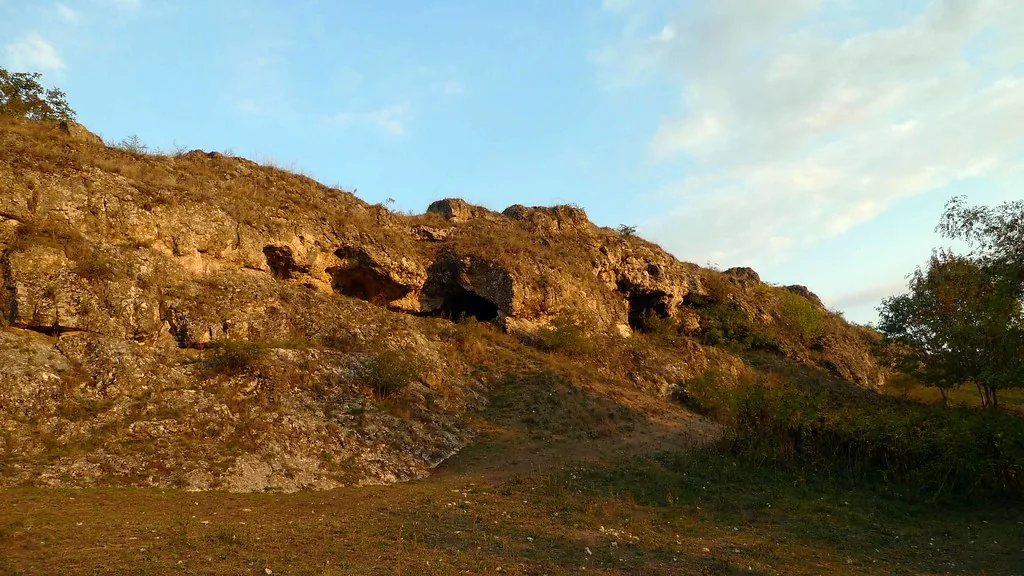
Butesti Gorge: a coral reef with a cave Neanderthals lived in
A two kilometre wall of fossil reef, with a cave where Neanderthals slept seventy thousand years ago. It is 15 kilometres from us, on asphalt the whole way.
In short
- A wall of fossil limestone reef, over two kilometres long, between 50 and 125 metres wide and 40 to 50 metres high, above the village of Butesti, Glodeni district.
- At the end nearest the village, a cave going about 9 metres into the rock. Neanderthals lived here, 70,000 to 80,000 years ago.
- It is a natural monument, protected since 1962 and reconfirmed by law in 1998.
- 15 kilometres from Hanul Cu Noroc, some 25 minutes by car, on asphalt the whole way.
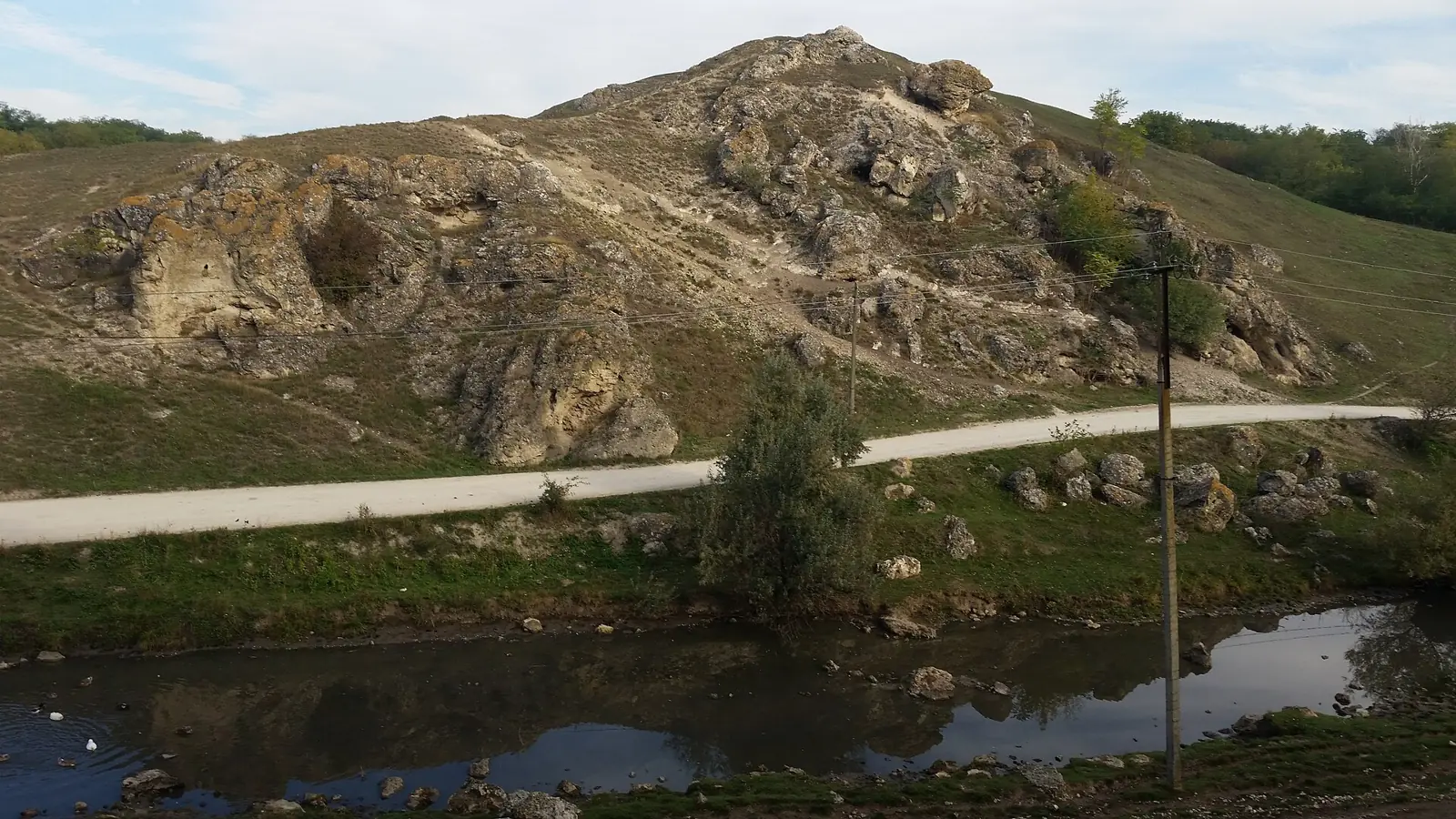
The same stone as ours, but a great deal more of it
If you have read our article on the toltre of the Prut, you already know what this is: the white rocks coming out of the northern hills are coral reefs, grown in a warm sea millions of years ago, left on dry land after the sea withdrew.
At Butesti you see the same thing, but on another scale. Not a single rock, but a continuous wall of over two kilometres that holds the whole edge of the village. The locals call it „the Giant”. The river Camenca runs along it, and from the road into the village you take it all in at a glance.
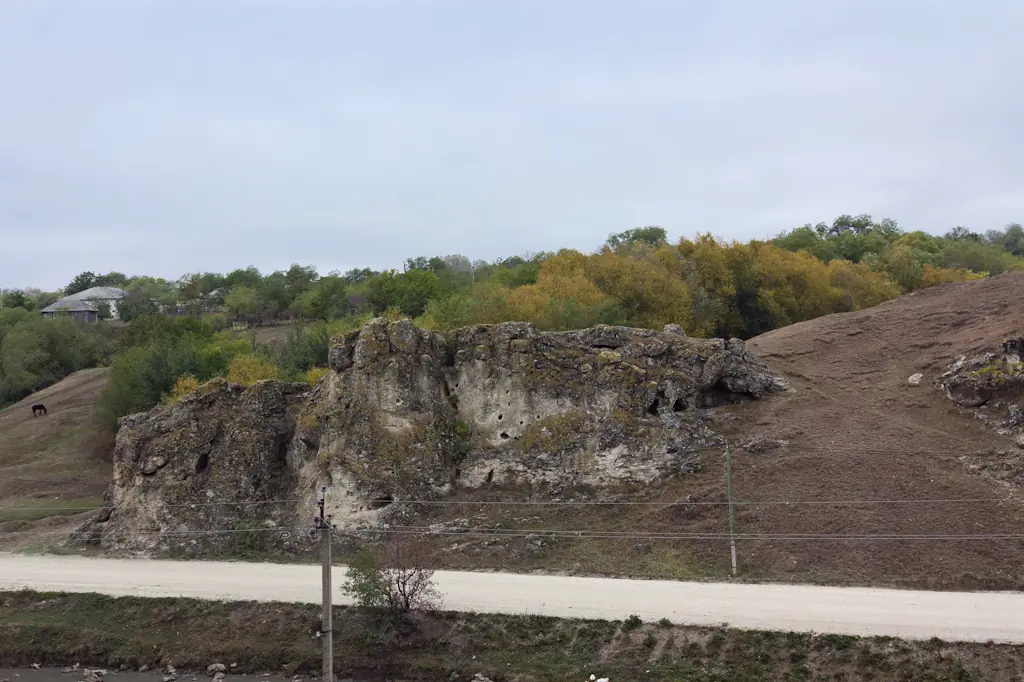
The cave where Neanderthals slept
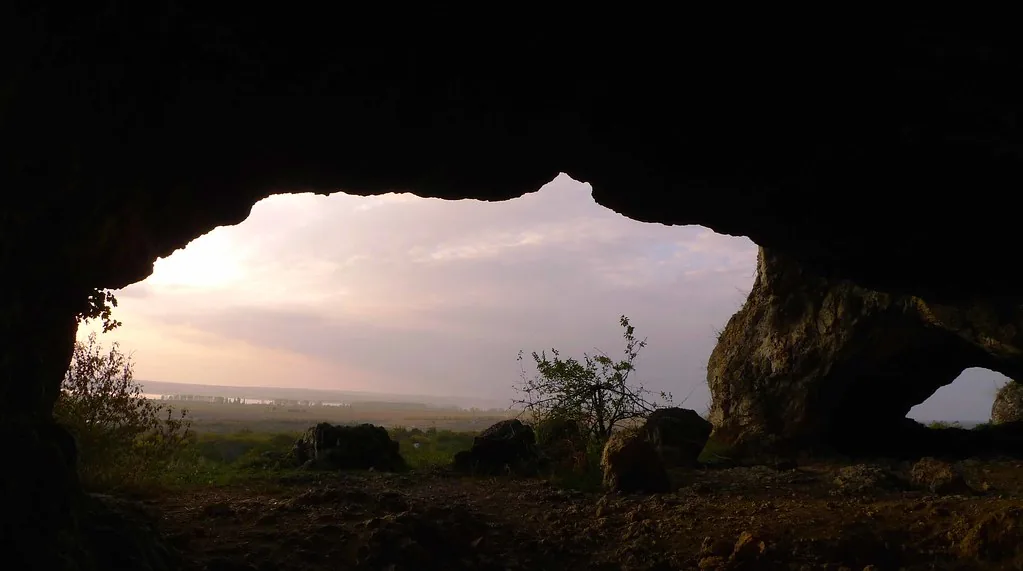
At the end nearest the village, in the highest part of the rock, a cave opens. It is not deep, going about nine metres into the wall, but it divides into several chambers and has more than one entrance.
Here is the part few people know. Archaeological excavations were carried out in the cave, and what came out belongs to the Middle Palaeolithic, the Mousterian culture. In other words, the place was used by Neanderthals, some 70,000 to 80,000 years ago.
About 3,000 fossil bones were taken from it: cave bear, cave hyena, bison, giant deer, marmot. Alongside them, flint scrapers and points, bone awls and needles, antler handles. The register of monuments of the Republic of Moldova lists the site in the national category, with Palaeolithic and Mesolithic occupation.
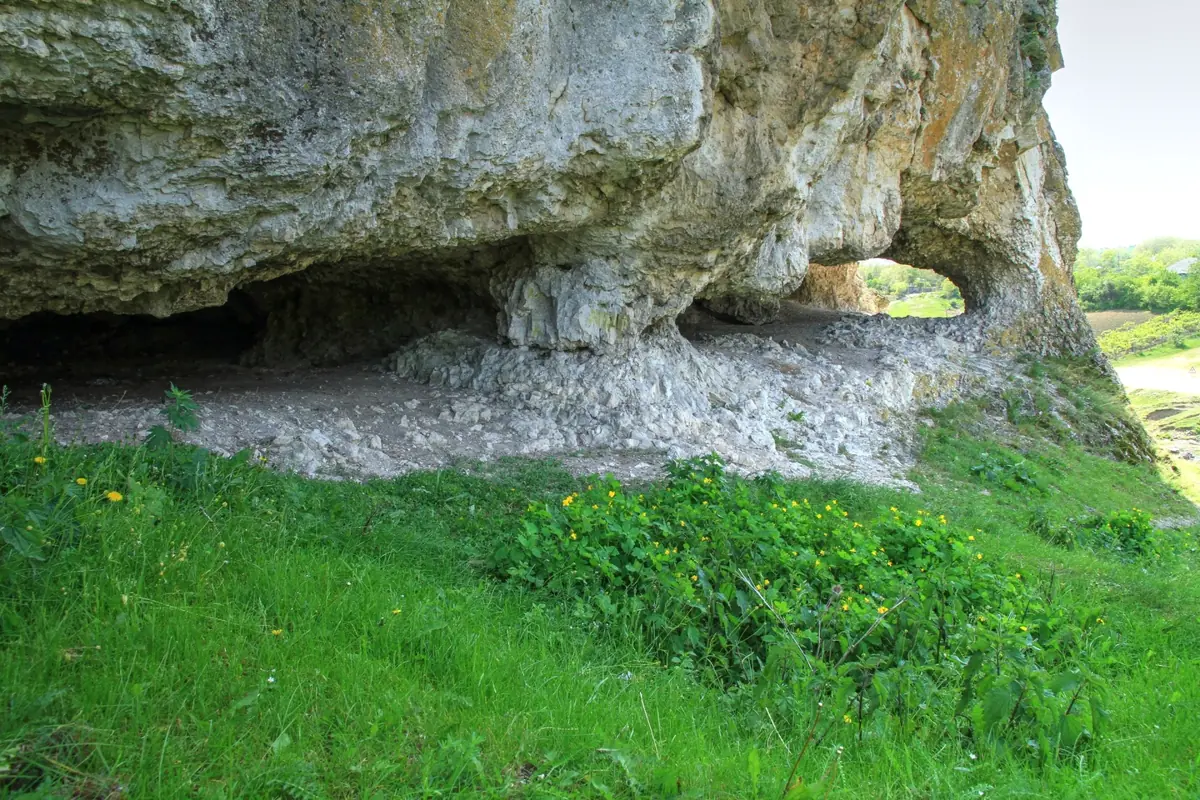
For us this is what ties it to our own village. At Duruitoarea Veche, the lower layers of the cave are far older, up to 300,000 years. At Butesti the occupation is more recent, but it belongs to the same world: the same cave bears, the same flint tools, the same people moving from one shelter to another along the valleys.
What the local people say
The story told in the village says that long ago, more than two centuries back, these places were covered in forest, and in the middle of it an enormous snake shaped rock lay resting out its old age, with a cave at each end. It has no support in any document, but it explains why the wall is called „the Giant”.
What else is there
On the rock and around it grow over 120 plant species, several of them in the Red Book of the Republic of Moldova. They are rock and steppe plants, which survived here precisely because the stone could never be ploughed.
A point that needs clearing up
Many tourism materials put Butesti Gorge inside the Padurea Domneasca Reserve. That is not quite right. Butesti is a natural monument in its own right, of the geological and palaeontological type, with 110 hectares under Law no. 1538 of 1998, protected since a 1962 decision. It appears on the tourist route of Padurea Domneasca, which is a different thing: the scientific reserve itself covers the Prut floodplain.
How to get there from Duruitoarea Veche
It is about 15 kilometres, some 25 minutes by car, southeast through Costesti. Of all the places around us, this one has the best road: asphalt the whole way, with no unpaved stretches.
It goes well with Suta de Movile, which is 13 kilometres from us in the same direction. In one day you can do both without hurrying.
What to bring
- Footwear with a good sole. The climb to the cave goes over grass and stone, and wet limestone is slippery.
- A torch, if you want to go into the cave. It is not fitted out and has no lighting.
- Water. On the rock you have no shade and no spring.
- Nothing left behind. It is a protected area, and here nobody digs or hammers after fossils.
How far is Duruitoarea Veche from Chisinau?
Where is Butesti Gorge?
In the village of Butesti, Camenca commune, Glodeni district, in northern Moldova, on the bank of the river Camenca. Approximate coordinates: 47°47′48″N, 27°20′10″E. From Duruitoarea Veche it is about 15 kilometres by road, some 25 minutes by car.
What is there to see at Butesti Gorge?
A wall of fossil limestone reef over two kilometres long, between 50 and 125 metres wide and 40 to 50 metres high, with a cave going about 9 metres into the rock, divided into several chambers. The cave was inhabited by Neanderthals. Over 120 plant species grow on the rock, some of them in the Red Book.
Who lived in the cave at Butesti?
Neanderthals, in the Middle Palaeolithic, about 70,000 to 80,000 years ago. About 3,000 fossil bones were taken from the cave, from cave bear, cave hyena, bison, giant deer and marmot, plus flint tools, bone awls and needles.
Is Butesti Gorge part of Padurea Domneasca?
No. It is a natural monument in its own right, of the geological and palaeontological type, with 110 hectares under the law. It appears on the tourist route of Padurea Domneasca, but the scientific reserve itself covers the Prut floodplain, not the rock at Butesti.
How far is it from Duruitoarea Veche to Butesti Gorge?
About 15 kilometres by road, some 25 minutes by car, southeast through Costesti. The road is asphalted the whole way, unlike other places in the area.
The Customs Service of the Republic of Moldova and the Border Police. These give the status of the Costesti-Stanca crossing, its opening date and the introduction of the EES system. customs.gov.md, border.gov.md
- „Cheile Butesti”, Romanian Wikipedia. This gives the dimensions of the wall, the depth of the cave, the natural monument status, the area and the number of plant species. ro.wikipedia.org
- The „Padurea Domneasca” Nature Reserve. This gives the dimensions of the „Giant” rock and its place on the tourist route. padureadomneasca.silvicultura.md
- The register of state protected monuments of the Republic of Moldova. This gives entry 1505, „Butesti, Site, Palaeolithic, Mesolithic”, in the national category. dataset.gov.md
- Law no. 1538 of 25 February 1998 on the fund of state protected natural areas, the annex on natural monuments of the geological and palaeontological type.
- Road distances are calculated on the real road network, not in a straight line.

Come and see both
Butesti and Suta de Movile can be done in a single day, and from here you set off in the morning. Message us and we will tell you the way.
Phone and WhatsApp: +373 798 48 077
Address: Duruitoarea Veche, Riscani district, MD-5632, Moldova.
A weekend in northern Moldova: a two day itinerary
What was found in the Duruitoarea cave
Five cultural layers, a cave bear and a human jaw that was lost in Moscow.
Toltre: coral reefs in the middle of a field
Millions of years ago, the rocks around the village were the floor of a tropical sea.
Host: Nicolae Moscalu